

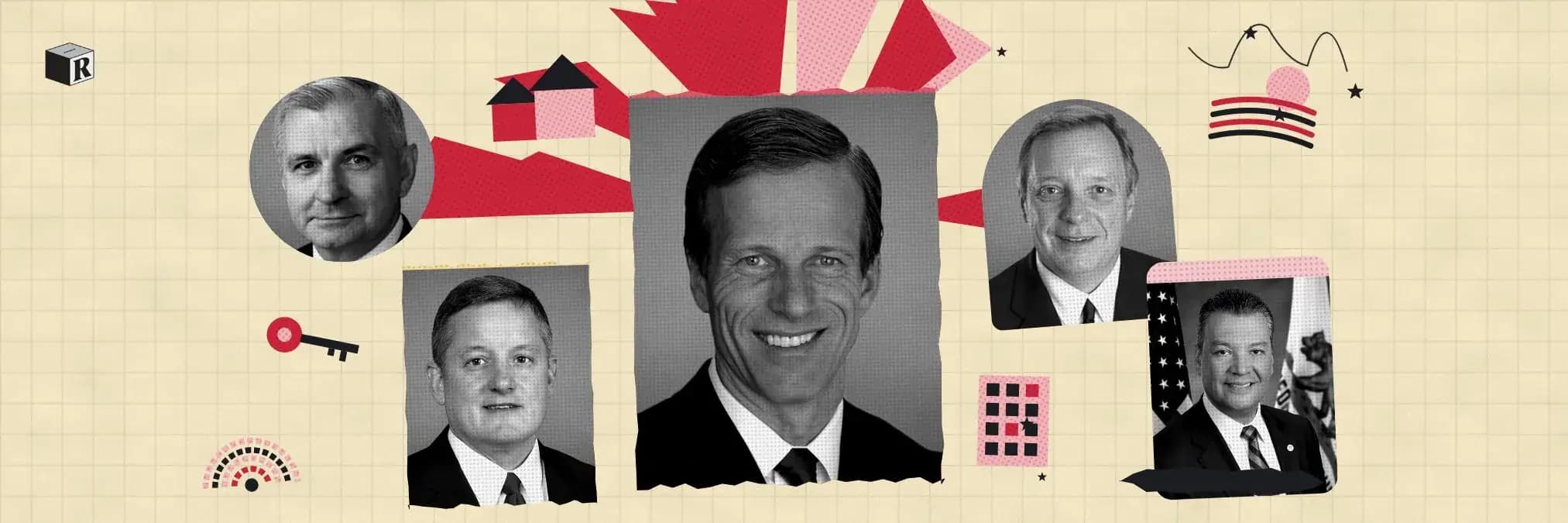
Tribal Trust Land Homeownership Act of 2025
The Tribal Trust Land Homeownership Act of 2025 (S. 723, 119th Congress) became Public Law 119-88 on May 4, 2026; the House passed it 384 to 40 on March 4, 2026 (Roll Call 81).
Sets deadlines for the Bureau of Indian Affairs to review and approve home and business mortgage paperwork for homes and businesses on Indian land. AI-AssistedWritten with AI from primary sources. Congress's own record always prevails. How we use AI.
Official title: A bill to require the Bureau of Indian Affairs to process and complete all mortgage packages associated with residential and business mortgages on Indian land by certain deadlines, and for other purposes.
Referandom Users vs. Congress
Referandom users
Vote to see how Referandom users voted.
Congress
- Senate: Passed with no objection (unanimous consent) (Dec 11, 2025)
- House: Passed 384–40 (Roll call 81, Mar 4, 2026)
- President: Signed into law as Public Law 119-88 (May 4, 2026)
What Do You Think?
How would you vote?
Vote to see the result.
What Happened in Congress?
Public Law 119-88, May 4, 2026
- SenatePassed with no objection (unanimous consent)
- HousePassed 384 to 40
- PresidentSigned into law
What It Does
- Requires a preliminary review within 10 days and approval or denial within 20 or 30 days, depending on the type
- Requires the BIA to notify lenders when paperwork arrives and to tell them about delays
- Gives federal agencies and Indian tribes read-only access to the Trust Asset and Accounting Management System
- Orders a Government Accountability Office report on digitizing documents to speed up mortgage packages
- Creates a Realty Ombudsman position in the BIA's Division of Real Estate Services
Who It Affects
- Indian tribesGet read-only access to the BIA's Trust Asset and Accounting Management System
- LendersGet notice when the BIA receives mortgage documents and when processing is delayed
- People with mortgages on Indian landResidential and business mortgage paperwork would be processed by set deadlines
Quick Facts
Became Law
From Congress.govWhat It Takes to Pass
Both chambers must pass the same text, then the President signs it or Congress overrides a veto.
SenateSimple majority
A simple majority of senators voting. Passed with no objection (unanimous consent) on December 11, 2025, with no roll call recorded. Congress.gov actions
HouseTwo-thirds
Two-thirds of the members voting, because the House took it up under suspension of the rules. Passed 384–40 on March 4, 2026. House Roll Call 81
PresidentSignature
Signed into law on May 4, 2026 (Public Law 119-88). Congress.gov actions
The Path So Far
- Introduced, done
- Committee, doneReported
- Senate Floor, donePassed by unanimous consent
- House, donePassed 384–40
- President, doneSigned into law
Sources: Congress.gov, House Clerk
Companion Bill in the House

How Congress Voted
How Congress VotedFrom Congress.gov424members of the House voted
384 Yea, 40 Nay, 0 Present
8 Not Voting
- Yea
- Nay
- Present
- Not Voting
| Party | Yea | Nay | Present | Not Voting |
|---|---|---|---|---|
| Republican | 176 | 39 | 0 | 3 |
| Democrat | 208 | 1 | 0 | 5 |
| Total | 384 | 40 | 0 | 8 |
Republican
- Yea
- 176
- Nay
- 39
- Present
- 0
- Not Voting
- 3
Democrat
- Yea
- 208
- Nay
- 1
- Present
- 0
- Not Voting
- 5
House roll call vote, March 4, 2026, On Motion to Suspend the Rules and Pass
How Each Member Voted
House: On Motion to Suspend the Rules and Pass
Yea 384











Nay 40




















Related Documents
Timeline
- Introduced in Senate
- Read twice and referred to the Committee on Indian Affairs. (text: CR S1350-1352)
- Introduced
- Committee
- Committee on Indian Affairs. Ordered to be reported without amendment favorably.
- Committee on Indian Affairs. Reported by Senator Murkowski without amendment. With written report No. 119-60.
- Star Print ordered on 119-60.
- Passed/agreed to in Senate: Passed Senate without amendment by Unanimous Consent.
- Passed Senate without amendment by Unanimous Consent.
- Message on Senate action sent to the House.
- Received in the House.
- Mr. Westerman moved to suspend the rules and pass the bill.
- Considered as unfinished business.
- Floor Vote
- Presented to President.
- Signed by President.
- Became Law
Questions About Tribal Trust Land Homeownership Act of 2025
6
What is S. 723?
S. 723 is the Tribal Trust Land Homeownership Act of 2025, a Senate bill in the 119th Congress, introduced on February 25, 2025 by Sen. John Thune (R-SD). It became Public Law 119-88 on May 4, 2026.
What does the Tribal Trust Land Homeownership Act of 2025 (S. 723) do?
This act sets forth requirements for the processing of a proposed residential leasehold mortgage, business leasehold mortgage, land mortgage, or right-of-way document by the Bureau of Indian Affairs (BIA).
Who sponsored the Tribal Trust Land Homeownership Act of 2025 (S. 723)?
S. 723, the Tribal Trust Land Homeownership Act of 2025, was introduced on February 25, 2025 by Sen. John Thune (R-SD).
Is the Tribal Trust Land Homeownership Act of 2025 (S. 723) law?
Yes. It became Public Law 119-88 on May 4, 2026. The House passed it on March 4, 2026 by a vote of 384 to 40 (House Roll Call 81).
How did Democrats and Republicans vote on the Tribal Trust Land Homeownership Act of 2025 (S. 723)?
In the House roll call on March 4, 2026 (House Roll Call 81), Democrats voted 208 to 1 and Republicans 176 to 39.
Is there a House version of S. 723?
Yes. H.R. 2130, the Tribal Trust Land Homeownership Act of 2025, introduced in the House on March 14, 2025 by Dusty Johnson (R-SD), is listed by the Congressional Research Service as an identical bill. Pending: reported by committee, no floor vote yet.
Around This Bill

More Bills on Native Americans
All Infrastructure Bills →




Cite This Page
Referandom. (2026, May 4). S. 723: Tribal Trust Land Homeownership Act of 2025. CDR Technology Foundation, Inc. Retrieved November 29, 2026, from https://www.referandom.us/bills/s-723-tribal-trust-land-homeownership-act-of-2025







Comments
Comments with insults, hate speech or personal information are removed.
Vote to see both sides' reasons.