We use analytics tools to understand how people use the site. They're optional: if you decline, the site works the same, no analytics cookies are set and Google gets only a cookieless, anonymous count signal. Your votes are saved either way; the details are in the privacy policy.
House floor actionsConsideration initiated pursuant to a previous order.
Library of CongressFailed of passage/not agreed to in House On agreeing to the resolution Failed by the Yeas and Nays: 211 - 213 (Roll no. 346).
Floor Vote
Failed in the House
House floor actionsORDER OF PROCEDURE - Mr. Mast asked unanimous consent that it be in order at any time to consider H. Con. Res. 61 and H. Con. Res. 64 in the House if called up by the Chair of the Committee on Foreign Affairs or his designee; that each such concurrent resolution be considered as read; and that the previous question be considered as ordered on each such concurrent resolution to adoption without intervening motion except for: 1) with respect to H. Con. Res. 61, one hour of debate equally divided and controlled by the Chair and ranking minority member of the Committee on Foreign Affairs or their respective designees; and 2) with respect to H. Con. Res. 64, one hour of debate equally divided among and controlled by Representative Mast of Florida, Representative Meeks of New York, and Representative McGovern of Massachusetts or their respective designees.
Library of CongressSubmitted in House
House floor actionsReferred to the House Committee on Foreign Affairs.
Introduced
Committee
Comments
Comments with insults, hate speech or personal information are removed.
What Congress Said
Members who spoke about this bill on the floor, in their own words from the Congressional Record.
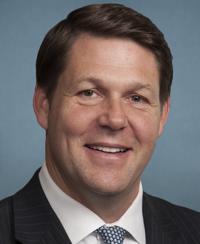
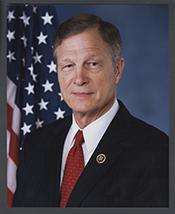
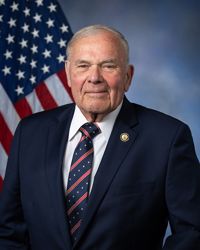
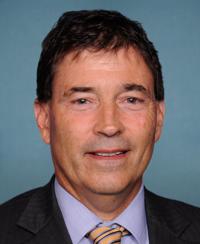
Republicans10 spoke
This resolution is weak. It is unnecessary. It is dangerous. It is also not about oversight. It is not about the Constitution. Just like the last resolution, it is about tying the President's hands, specifically in Venezuela.
I rise in opposition to the removal of the use of United States Armed Forces for hostilities within or against Venezuela, or the support for drug dictators act.
James Madison warned us that: ``In no part of the Constitution is more wisdom to be found than in the clause which confides the question of war or peace to the legislature, and not to the executive.'' Madison called it the crown jewel of Congress.
I rise in strong opposition to this resolution, which is not necessary, as it removes our Armed Forces from hostilities against a country where there have been no hostilities. The War Powers Act has no legal bearing on actions that could happen in the future.
This resolution would prohibit the use of United States Armed Forces off the coast of Venezuela without regard for the real and growing threats posed by the foreign terrorist Maduro regime.
The supporters of this resolution are correct. Congress has to initiate hostilities, but neither of these resolutions are applicable to current events. H. Con. Res. 64 orders the President to remove forces from Venezuela that are not in Venezuela. Until and unless they are, this is at best an empty partisan exercise.
I am in strong opposition to this resolution because the issue before us is not one of Presidential authority. It is whether Congress should undermine the President's ability to deter threats and protect the United States' interests in our own hemisphere.
I rise today in strong opposition to the resolution which seeks to limit the constitutional authority of the President under Article II and micromanage the Commander in Chief during a national security crisis.
I would ask Mr. McGovern: Is the contention that this is a present condition, that there are U.S. forces in violation of the War Powers Resolution, or is it about a hypothetical future?
Right now, by placing U.S. military assets off the coast of Venezuela, this administration has them in harm's way right now. That is why, in a bipartisan way, we have introduced this resolution. It provides the House of Representatives with the simple up-or-down vote.
First, let me talk about the picture he tried to show me. That was a bipartisan trip, Democrats and Republicans, working together. It was called the Boston Group. We were bringing the opposition and at that time the Chavistas together.
Why did the Framers vest the power to declare war in Congress alone? It was because the kings were constantly plunging their entire nations into wars of vanity, of conceit, of caprice, of mere whimsy.
I urge my colleagues to vote ``yes'' on this resolution. Let's take back the power and authority that rightfully belongs to Congress and put an end to the lawlessness that makes us all less safe.
The purpose of the War Powers Act was to prevent secret wars from happening after Vietnam. The reason why we have this is so that the administration is accountable to the people. No war should be declared and no war should be prosecuted in the name of the American people without their consent.

















Comments
Comments with insults, hate speech or personal information are removed.