


FENCES Act
Official title: To amend the Clean Air Act to clarify standards for emissions emanating from outside of the United States, and for other purposes.
What Do You Think?
How would you vote?
Vote to see the result.
What Happened in Congress?
April 16, 2026
- HousePassed 220 to 208
Where the Bill Stands
- Introduced, done
- Committee, done
- Floor Vote, done
- Outcome, current stage
How Congress Voted
How Congress Voted
How Congress VotedOfficial Record428members of the House voted
220 Yea, 208 Nay, 0 Present
3 Not Voting
- Yea
- Nay
- Present
- Not Voting
| Party | Yea | Nay | Present | Not Voting |
|---|---|---|---|---|
| Republican | 213 | 1 | 0 | 3 |
| Democrat | 6 | 207 | 0 | 0 |
| Independent | 1 | 0 | 0 | 0 |
| Total | 220 | 208 | 0 | 3 |
Republican
- Yea
- 213
- Nay
- 1
- Present
- 0
- Not Voting
- 3
Democrat
- Yea
- 6
- Nay
- 207
- Present
- 0
- Not Voting
- 0
Independent
- Yea
- 1
- Nay
- 0
- Present
- 0
- Not Voting
- 0
House roll call vote, April 16, 2026
How Each Member Voted
House: On Passage
Yea 220
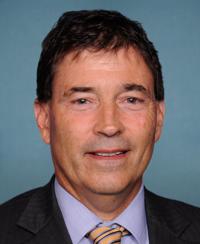
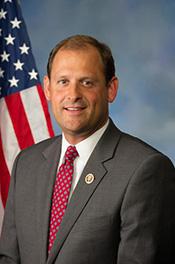
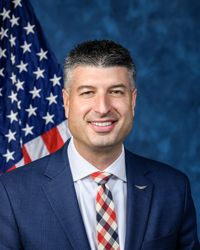
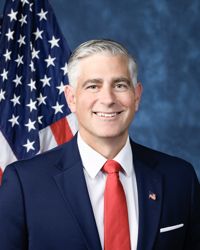
Nay 208




Not Voting 3
What This Bill Does
This bill modifies standards under the Clean Air Act to exempt states from penalties for emissions outside of the state’s control.
The bill provides that certain nonattainment areas (i.e., those classified as severe or extreme for ozone or as serious for particulate matter) are not subject to sanctions for implementation plan deficiencies or for fees for failing to attain national ambient air quality standards (NAAQS) if the state demonstrates it would have avoided deficiencies or attained its standards but for emissions outside of its control (e.g., emissions from an exceptional event like a wildfire). A state must renew its demonstration at least once every five years for exemption from the sanctions or fees to continue to apply.
The bill specifies that an area within a state may not be designated as a nonattainment area regarding any new or revised NAAQS for a pollutant if the state demonstrates it would be in attainment but for emissions emanating from outside of the country, regardless of whether the emissions resulted from human activity.
For purposes of approving a state implementation plan or meeting certain NAAQS, current law provides that a state may demonstrate to the Environmental Protection Agency that but for emissions emanating from outside of the country, it would have attained applicable NAAQS by the attainment date for certain pollutants. The bill specifies that such emissions emanating from outside the country may include emissions that result from human activity.
Sponsors

Related Documents
Timeline
- SenateReceived in the Senate and Read twice and referred to the Committee on Environment and Public Works.
- House floor actionsConsidered as unfinished business. (consideration: CR H2937-2938)
- Floor Vote
- Passed the House
- House floor actionsRules Committee Resolution H. Res. 1174 Reported to House. Rule provides for consideration of H.R. 6387, H.R. 6398, H.R. 6409 and H. Res. 1156. The resolution provides for consideration of each measure under a closed rule with one hour of general debate on each measure. The resolution also provides one motion to recommit on H.R. 6387, H.R. 6398, and H.R. 6409.
- House floor actionsSupplemental report filed by the Committee on Energy and Commerce, H. Rept. 119-594, Part II.
- House floor actionsReported by the Committee on Energy and Commerce. H. Rept. 119-594.
- House committee actionsCommittee Consideration and Mark-up Session Held
- House committee actionsSubcommittee Consideration and Mark-up Session Held
- Library of CongressIntroduced in House
- House floor actionsReferred to the House Committee on Energy and Commerce.
- House committee actionsReferred to the Subcommittee on Environment.
- Introduced
- Committee


Comments
Comments with insults, hate speech or personal information are removed.