

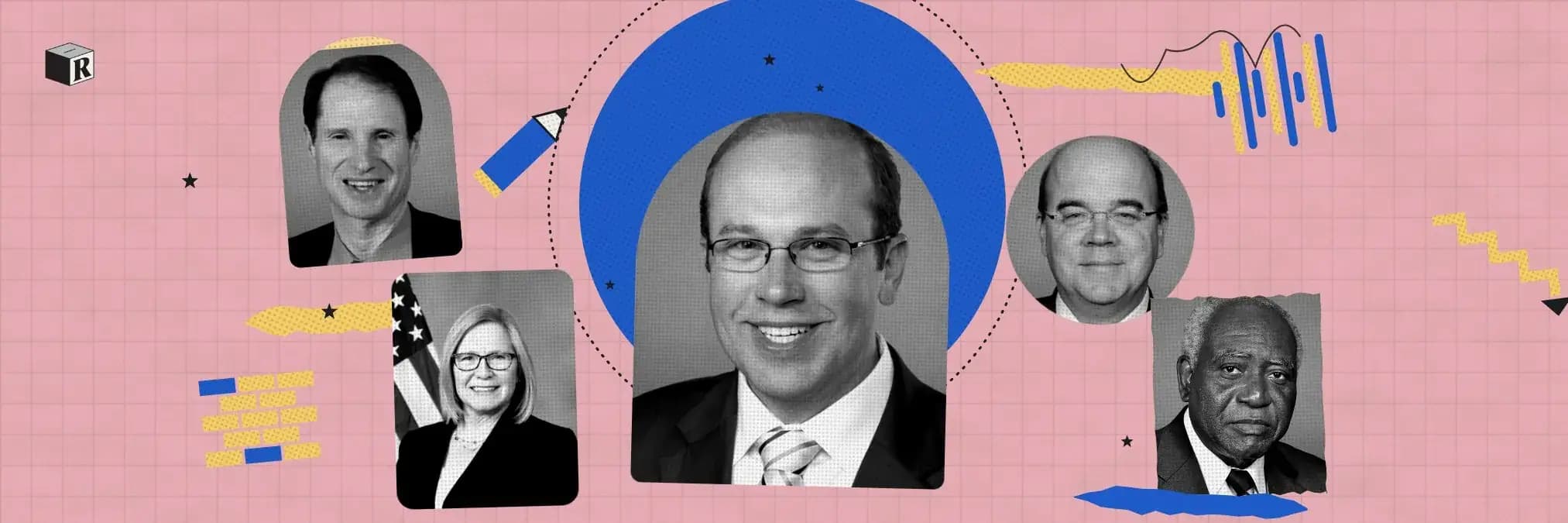
Pandemic Unemployment Fraud Enforcement Act
The Pandemic Unemployment Fraud Enforcement Act (H.R. 1156, 119th Congress) passed the House 295 to 127 on March 11, 2025 (Roll Call 68) and had not passed the Senate as of November 24, 2026.
Fraud tied to four COVID-19 unemployment programs could be charged or pursued in civil court for 10 years instead of 5. AI-AssistedWritten with AI from primary sources. Congress's own record always prevails. How we use AI.
Official title: To amend the CARES Act to extend the statute of limitations for fraud under certain unemployment programs, and for other purposes.
Referandom Users vs. Congress
Referandom users
Vote to see how Referandom users voted.
Congress
- House: Passed 295–127 (Roll call 68, Mar 11, 2025)
- Senate: Not voted yet
What Do You Think?
How would you vote?
Vote to see the result.
What Happened in Congress?
March 11, 2025
- HousePassed 295 to 127
What It Does
- Covers Pandemic Unemployment Assistance, Federal Pandemic Unemployment Compensation, Mixed Earners Unemployment Compensation, and Pandemic Emergency Unemployment Compensation
- Applies to criminal charges like aggravated identity theft, wire fraud, and conspiracy, and to civil false claims actions
- Does not apply if the old time limit ran out before the bill's enactment
- Rescinds specified unobligated American Rescue Plan Act of 2021 funds given to the Department of Labor for anti-fraud work
Who It Affects
- People who commit fraud related to these programsCould face criminal charges or civil actions for 10 years, not 5
- Department of LaborLoses specified unobligated anti-fraud and program integrity funds
What Changes
Quick Facts
What It Takes to Pass
Both chambers must pass the same text, then the President signs it or Congress overrides a veto.
HouseSimple majority
A simple majority of the members voting. Passed 295–127 on March 11, 2025. House Roll Call 68
SenateSimple majorityGeneral rule
A simple majority of senators voting to pass. Ending debate on most measures first takes cloture: three-fifths of senators duly chosen and sworn, 60 when every seat is filled.
PresidentSignatureGeneral rule
The President signs it into law or vetoes it; a veto stands unless two-thirds of those voting in each chamber override it.
The Path So Far
- Introduced, done
- Committee, doneReported
- House Floor, donePassed 295–127
- Senate, current stage
- President, not yet
Sources: Congress.gov, House Clerk
How Congress Voted
How Congress VotedFrom Congress.gov422members of the House voted
295 Yea, 127 Nay, 0 Present
10 Not Voting
- Yea
- Nay
- Present
- Not Voting
| Party | Yea | Nay | Present | Not Voting |
|---|---|---|---|---|
| Republican | 212 | 0 | 0 | 6 |
| Democrat | 83 | 127 | 0 | 4 |
| Total | 295 | 127 | 0 | 10 |
Republican
- Yea
- 212
- Nay
- 0
- Present
- 0
- Not Voting
- 6
Democrat
- Yea
- 83
- Nay
- 127
- Present
- 0
- Not Voting
- 4
House roll call vote, March 11, 2025, On Passage
How Each Member Voted
House: On Passage
Yea 295










Nay 127
















Related Documents
Timeline
- Introduced in House
- Referred to the House Committee on Ways and Means.
- Introduced
- Committee
- House committee actions
- Reported (Amended) by the Committee on Ways and Means. H. Rept. 119-6.
- Rules Committee Resolution H. Res. 211 Reported to House. Rule provides for consideration of H.J. Res. 25, H.R. 1156 and H.R. 1968. The resolution provides for consideration of H.J. Res. 25, H.R. 1156, and H.R. 1968 under a closed rule. Also, the resolution provides for one hour of general debate and one motion to recommit on each measure.
- Floor Vote
- Passed the House
- Received in the Senate. Read the first time. Placed on Senate Legislative Calendar under Read the First Time.
- Read the second time. Placed on Senate Legislative Calendar under General Orders. Calendar No. 29.
Questions About Pandemic Unemployment Fraud Enforcement Act
5
What is H.R. 1156?
H.R. 1156 (HR 1156) is the Pandemic Unemployment Fraud Enforcement Act, a House bill in the 119th Congress, introduced on February 10, 2025 by Rep. Jason Smith (R-MO). The House passed it on March 11, 2025 by a vote of 295 to 127 (House Roll Call 68). The Senate has not passed it as of November 24, 2026.
What does the Pandemic Unemployment Fraud Enforcement Act (H.R. 1156) do?
This bill extends from 5 to 10 years the statute of limitations for federal criminal charges or civil enforcement actions for fraud related to several unemployment insurance programs that were established during the COVID-19 pandemic.
Who sponsored the Pandemic Unemployment Fraud Enforcement Act (H.R. 1156)?
H.R. 1156, the Pandemic Unemployment Fraud Enforcement Act, was introduced on February 10, 2025 by Rep. Jason Smith (R-MO).
Did the Pandemic Unemployment Fraud Enforcement Act (H.R. 1156) pass?
The House passed it on March 11, 2025 by a vote of 295 to 127 (House Roll Call 68). The Senate has not passed it as of November 24, 2026.
How did Democrats and Republicans vote on the Pandemic Unemployment Fraud Enforcement Act (H.R. 1156)?
In the House roll call on March 11, 2025 (House Roll Call 68), Democrats voted 83 to 127 and Republicans 212 to 0.
Around This Bill

More Bills on Labor and Employment
All Labor and Welfare Bills →



Cite This Page
Referandom. (2025, March 13). H.R. 1156: Pandemic Unemployment Fraud Enforcement Act. CDR Technology Foundation, Inc. Retrieved November 28, 2026, from https://www.referandom.us/bills/hr-1156-pandemic-unemployment-fraud-enforcement-act










Comments
Comments with insults, hate speech or personal information are removed.
Vote to see both sides' reasons.